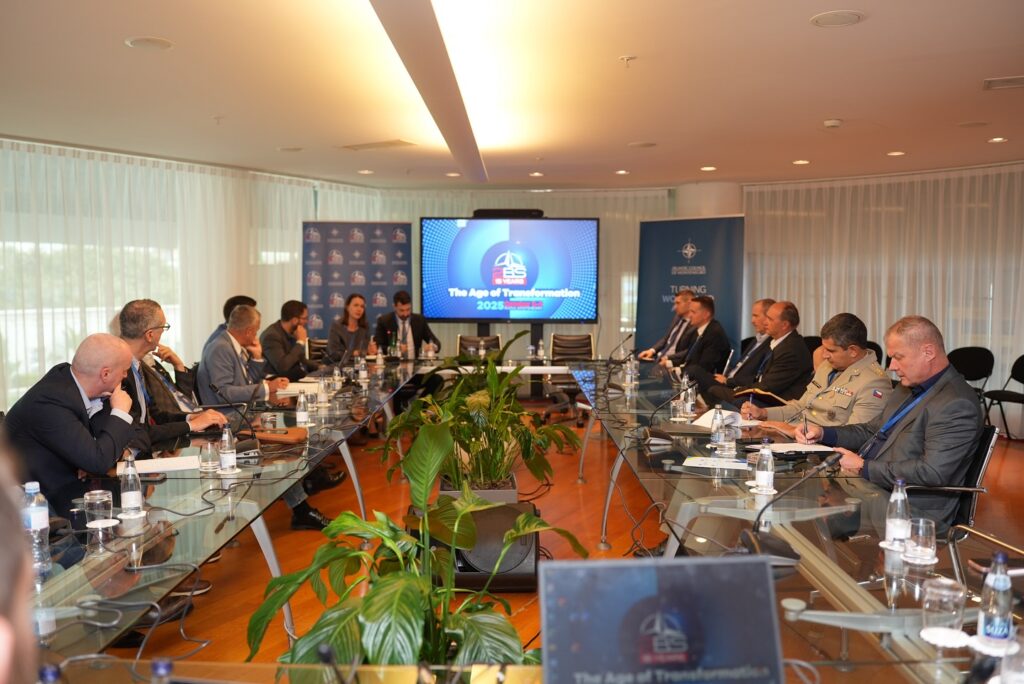
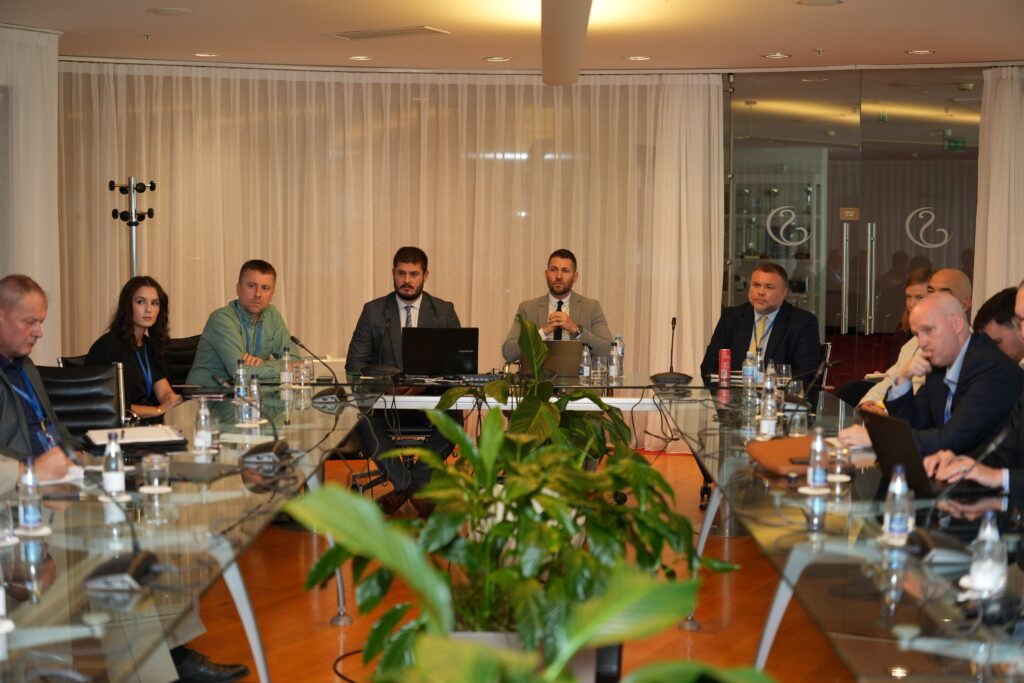
Res Publica Foundation is a partner of the Building the “Serbian World”: Serbia’s Impact on security and stability in the Western Balkans project.

The project Building the “Serbian World”: Serbia’s Impact on security and stability in the Western Balkans supports democratic resilience and good governance in the Western Balkans by fostering regional cooperation and informed dialogue. In this context, the project addresses Serbia’s asymmetric and hybrid influence in the region and seeks to strengthen local resilience against such activities. Through workshops, networking, fact-finding visits, and stakeholder meetings in Kosovo, Bosnia and Herzegovina, and Montenegro, local experts, civil society representatives, and policymakers will jointly explore the role of external influences in shaping governance and stability. By connecting V4 partners with regional stakeholders, the project will produce locally grounded policy recommendations that contribute to democratic development and the EU integration process.
The project is funded by the International Visegrad Fund.
About the Project
This project aims to strengthen democratic resilience and good governance in the Western Balkans by analyzing the instruments of influence used by Serbia in the region. Through cooperation with local expert communities and stakeholders from Serbia, Kosovo, Bosnia and Herzegovina, and Montenegro, the initiative will collect analytical information on Serbia’s non-military hybrid tools of influence. A key focus will be the impact of these activities on the rule of law, democratic order, and the EU integration process. The project will support dialogue through fact-finding visits, stakeholder meetings, and workshops, and will culminate in the development of policy recommendations grounded in local and regional insights.
Reasoning for the need:
Serbia currently strives for the position of regional hegemon in the Western Balkans as part of the promotion of its foreign policy and the ideology of the “Serbian world”. To achieve this goal, it uses a number of instruments of influence violating the basic principles of good governance, that have a negative impact on the security situation, rule of law and the democratic order in the region – most significantly in Kosovo, Bosnia and Herzegovina and Montenegro, where Serbia actively uses the local Serbian minorities. In above-mentioned regions, Serbia uses non-military hybrid tools of influence, well known from the long-term analysis of the influence of the Russian Federation in the post-Soviet space.
Due to its historical ties to Russia since the beginning of the Russian war against Ukraine, Serbia is a key country in the Western Balkans. Both, the United States and the European Union are seeking to bring it to the Western democratic fold, while at the same time minimizing its ties with the Russian Federation. Thus, focus on good governance, democratization, and minimization of foreign tools of influence which stand against these principles are critical to observe and analyse for a successful EU integration and continuous transformation process.
Project objectives:
⦁ To describe and analyse the malignant instruments of influence that Serbia actively uses in the region, specifically in Kosovo, Bosnia and Herzegovina and Montenegro, that violates principles of the good governance, undermine the rule of law, the principles of democracy, as well as the stability of the region.
⦁ To identify, and analyse, links of the main instruments of malevolent influence to the state structures of Serbia (e.g., domestic policies, leading political entities, influence of specific individuals and security structures) and map the connection of these instruments with the foreign policy of Serbia.
⦁ To define potential areas of policy changes in Serbia mitigating above-mentioned malignant tools of instruments and supporting good governance.
⦁ To describe potential risks stemming from the political situation in Serbia and its regional ambitions as it pertains to the European integration process.
⦁ To connect local expert communities and relevant stakeholders from different parts of the region who face a common challenge of being subjected to the influence of Serbian state. Connect mentioned stakeholders with relevant decision makers during workshops and final closed roundtable.
Form of implementation:
The analytical information and data will be collected through cooperation with local experts and stakeholders directly in the target areas of Serbia’s influence in the region. Data and information will be collected through the representatives of the local civil society, journalists, experts, but also politicians from the environment of the Serb populations in the region – Serbia, Kosovo, Montenegro and Bosnia and Herzegovina. As part of the project, networking activities (stakeholder meetings) and workshops on the given issue will be carried out directly in the region during fact finding visits in all 4 listed countries. Workshops will be organized as a moderated roundtable discussion on pre-planned issues and topic groups in relation with target area and in relation with main objectives. Local and regional experts, civil society organizations (CSOs), journalists, political / local municipalities representatives and other relevant stakeholders will be part of workshops in order to diversify the discussion and research outputs.
At the end of the project a closed meeting with representatives of the EU, V4 and EU MFA, journalists, civil society, local representatives and regional experts from the countries of interest will be held in Prague, Czech Republic. At this half-day round table debate for 25-35 selected participants, research results will be discussed and disseminated to the relevant stakeholders (EU, V4 MFAs and MoDs, CSOs, regional experts and representatives of local municipalities in the targeted areas). Analysis will be also published on web pages of AMO and V4 partner NGO-security related organizations.
During the period of project realization, the outputs of the project will be published in relevant regional and European media (Balkan Insight, European Western Balkans, Visegrad Insight), in order to promote the discussed issue.
Utility of the project results:
The findings will serve to support the decision-making of V4 governmental bodies (MFAs, MODs) and other strategic foreign-policy, governmental officials and representatives of EU and NATO countries, as well as non-governmental experts and the wider public. Aim will be to open discussion regarding the policy changes and to encourage Serbia to enhance the principles of good governance and rule of law.
The issue will be discussed and analysed in collaboration with local experts, and the findings will be described and presented in a comprehensive Final Report. The report will be disseminated to relevant stakeholders – V4 MFAs, EU bodies, CSOs in Serbia and other relevant entities. Results of the project will be published in regional and European media. The findings will be also discussed at a roundtable final conference in the Czech Republic with the relevant stakeholders. Closed roundtable will connect relevant stakeholders and local expert communities with decision-makers on various levels of the international community.
Outputs of the project:
⦁ 3x workshop in the target area of Kosovo, Bosnia and Herzegovina and Montenegro with the aim of field research, analytical work, as well as networking with local CSOs, local bodies and representatives of local population. Outputs of these 4 workshops will be 4 country reports with the focus on analysis of tools of influence that Serbia utilizes, and that have negative impact on democracy, good governance and security in these areas. These 4 reports will be written and published both in English and local language mutations.
⦁ 1x Final closed-door roundtable of 25 – 35 participants in the Czech Republic with the aim of discussion of the results of the project / project findings.
⦁ 1x Final policy-brief report which will cover both results of the 4 workshops and discussions, as well as results from the final roundtable. Report will include policy recommendations for V4 / EU countries stakeholders.
⦁ 5x media articles that will cover area of research and will inform the wider public about project results and findings. Articles will be published in local media.
About the Partners
The Belgrade Centre for Security Policy (BCSP) is a leading independent think tank in Serbia focused on advancing democratic oversight of the security sector and strengthening the rule of law. Through research, advocacy, and capacity-building, BCSP promotes accountable institutions and informed public debate on security-related issues in the Western Balkans.
NGO AKTIV Mitrovica is a civil society organization established in 2009 in the divided city of Mitrovica, Kosovo. Dedicated to promoting human rights, interethnic cooperation, and democratic governance, AKTIV actively engages local communities through research, advocacy, and capacity-building initiatives.
The Digital Forensic Center (DFC, in connexction with the Atlantic Council of the Montenegro) is the first organization of its kind in the Western Balkans, dedicated to combating disinformation, fake news, and propaganda campaigns that threaten democratic processes and institutions. Through research, analysis, and educational programs, DFC enhances public awareness and resilience against malicious information activities in Montenegro.
Vanjskopolitička inicijativa BH (FPI BH) is a non-governmental, non-profit organization established in 2004, dedicated to advancing and influencing the debate on foreign policy, international relations, and Bosnia and Herzegovina’s international obligations. Through research, publications, and events, FPI BH promotes awareness of internal governance issues and EU integration processes, providing expert analyses and advisory support to policymakers and fostering youth engagement in public affairs.
Res Publica Foundation is a prominent Polish think tank established in 1979, dedicated to enhancing public debate and cultural discourse in Central Europe. Through its flagship publications—Res Publica Nowa, Visegrad Insight, and the New Europe 100 initiative—the foundation fosters intellectual exchange and policy analysis, contributing to the development of democratic resilience and governance in the region.
BalkanViews is a Slovakian think tank dedicated to promoting democratic governance, EU integration, and informed public discourse in the Western Balkans. Through research, policy analysis, and collaborative initiatives, BalkanViews addresses key regional challenges, contributing to stability and European integration efforts.
https://www.visegradfund.org